
Dangers of Caesarean Section Births

21 August 2026
By Adam Millar
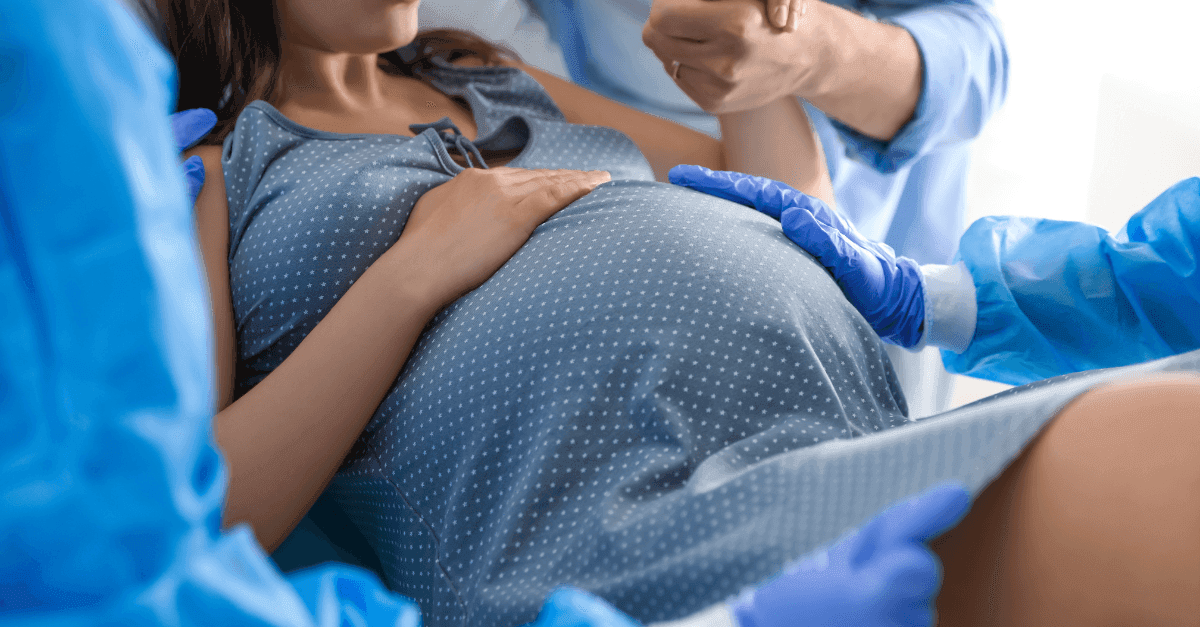
It seems that giving birth by caesarean section is no longer a rare event. Recent reporting by BBC has highlighted that around one in four births in England are emergency caesarean sections. No equivalent information is available for Northern Ireland. That said the trend appears to be that the number of births by caesarean section, both elective (planned in advance) and emergency (unplanned, usually decided during labour) have risen sharply in recent years.
While deliveries by caesarean section are safe and can be lifesaving for mother and baby, they remain major abdominal surgery carrying real and significant risk. As the number of caesarean procedures increase, so too does the number of adverse outcomes. Where care falls below an acceptable standard and causes harm, patients may be entitled to compensation.
Risks and Dangers of Caesarean Sections
Both planned and emergency caesarean sections carry a number of potential complications. Many of which are known risks of the procedure for which the Patient will have given consent. The important question in any negligence claim is not whether something went wrong, but whether the care provided fell below the standard a patient should reasonably expect. Common risks include:
- Surgical errors – accidental injury to the bladder, bowel or other organs; lacerations to the baby during delivery; and retained surgical items.
- Anaesthetic complications – adverse reactions to spinal, epidural or general anaesthetic; failed or inadequate anaesthesia; and, in rare cases, nerve damage.
- Infection – wound infection, endometritis, urinary tract infections, and in severe cases, sepsis.
- Haemorrhage – significant blood loss during or after surgery (postpartum haemorrhage), sometimes requiring blood transfusion or, rarely, hysterectomy.
- Blood clots – increased risk of deep vein thrombosis (DVT) and pulmonary embolism following surgery.
- Risks to the mother – longer recovery, scarring, adhesions, and increased risks in future pregnancies such as placenta praevia, placenta accreta, and uterine rupture.
- Risks to the baby – birth injuries, breathing difficulties (transient tachypnoea), and where an emergency caesarean is delayed, oxygen deprivation (hypoxia), which in the most serious cases can lead to hypoxic-ischaemic encephalopathy (HIE) and lifelong disability such as cerebral palsy.
Common Examples of Negligence in Caesarean Sections
A poor outcome alone does not amount to negligence. There must be a failure to meet the required standard of care that causes harm. Common examples of negligence may include:
- Failure to inform – not properly advising the patient of material risks or reasonable alternatives (for example, failing to discuss the comparative risks and benefits of caesarean versus vaginal birth), thereby undermining informed consent.
- Delayed decision-making – failure to perform an emergency caesarean despite clear signs of foetal distress (such as abnormal CTG traces) or failure to progress in labour, causing avoidable harm to mother or baby.
- Surgical errors – negligent technique during the procedure causing injury to organs or to the baby.
- Anaesthetic failures – incorrect administration of anaesthesia or failure to monitor the patient adequately.
- Post-operative care failures – failure to recognise and treat complications such as infection, haemorrhage or blood clots; inadequate monitoring and follow-up after the procedure.
What Must Be Shown for a Claim to Be Successful
To succeed, a person bringing a claim must prove four things:
- A duty of care was owed: This simply means the healthcare team had a legal responsibility to look after you properly. Doctors, midwives, NHS trusts and private hospitals all owe this duty to their patients.
- That duty was breached: This means the care given fell below the standard of a reasonably competent clinician. The courts use a long-standing legal test (known as the Bolam test) which says a doctor is not negligent if he/she acted in a way that a responsible body of other medical professionals would accept as proper. A later case (Bolitho) added an important safeguard: that professional opinion must also be logical and stand up to scrutiny, so a practice cannot be defended if it makes no sense.
- The breach caused the harm: You must prove that the breach of duty caused the injury. Patient consent is key issue. In the case (Montgomery v Lanarkshire Health Board), the courts confirmed that patients must be told about significant risks and any reasonable alternatives, so they can make an informed choice. A risk counts as significant if a reasonable patient in your position would want to know about it. If you were not properly warned, and you would have made a different decision that avoided the harm, this can form the basis of a claim.
- You suffered a loss as a result: Finally, you must have suffered a genuine, recognised harm. Compensation can cover the pain, suffering and impact on your quality of life, as well as financial losses such as lost earnings, the cost of care and support, rehabilitation, and any specialist equipment or home adaptations. Where a baby suffers a serious birth injury, these costs can be very substantial.
Limitation date
Generally, legal proceedings must be issued within three years of the date of the injury, or within three years of the date when you first realised the harm may have been caused by negligence. There are exceptions to this rule which include cases brought on behalf of a child or on behalf of someone who lacks mental capacity.
Conclusion
Births by caesarean section are increasingly common and, in most cases, are performed safely. However, when care falls below the required standard, the consequences for mother and baby can be devastating and life changing.
If you believe that you or your baby suffered avoidable harm during a caesarean delivery, we encourage you to seek specialist medical negligence legal advice. An experienced solicitor can assess the circumstances of your case and advise whether you may have a valid claim for compensation.
To speak with a member of our team, call us on 028 8772 2102 or email enquiries@paduffy.com.
This information is intended for general guidance purposes only and does not constitute legal advice, nor should it be relied upon as a substitute for professional advice specific to your circumstances.
News & Legal Insights
More from this Category













P.A. Duffy & Co
Speak to us with no obligation
Confidential legal advice from experienced solicitors across Ireland.
Want to talk?
Call us with any queries
Mon – Fri, 9am – 5pm
Make an Enquiry
Leave your details below and we'll get in touch with you as soon as possible!