
What Is the Difference Between an Inquest, Public Inquiry and Judicial Review?
Compare inquests, public inquiries and judicial review in Northern Ireland, including their purpose, who starts them, what they investigate and the outcomes they can produce.
21 October 2026
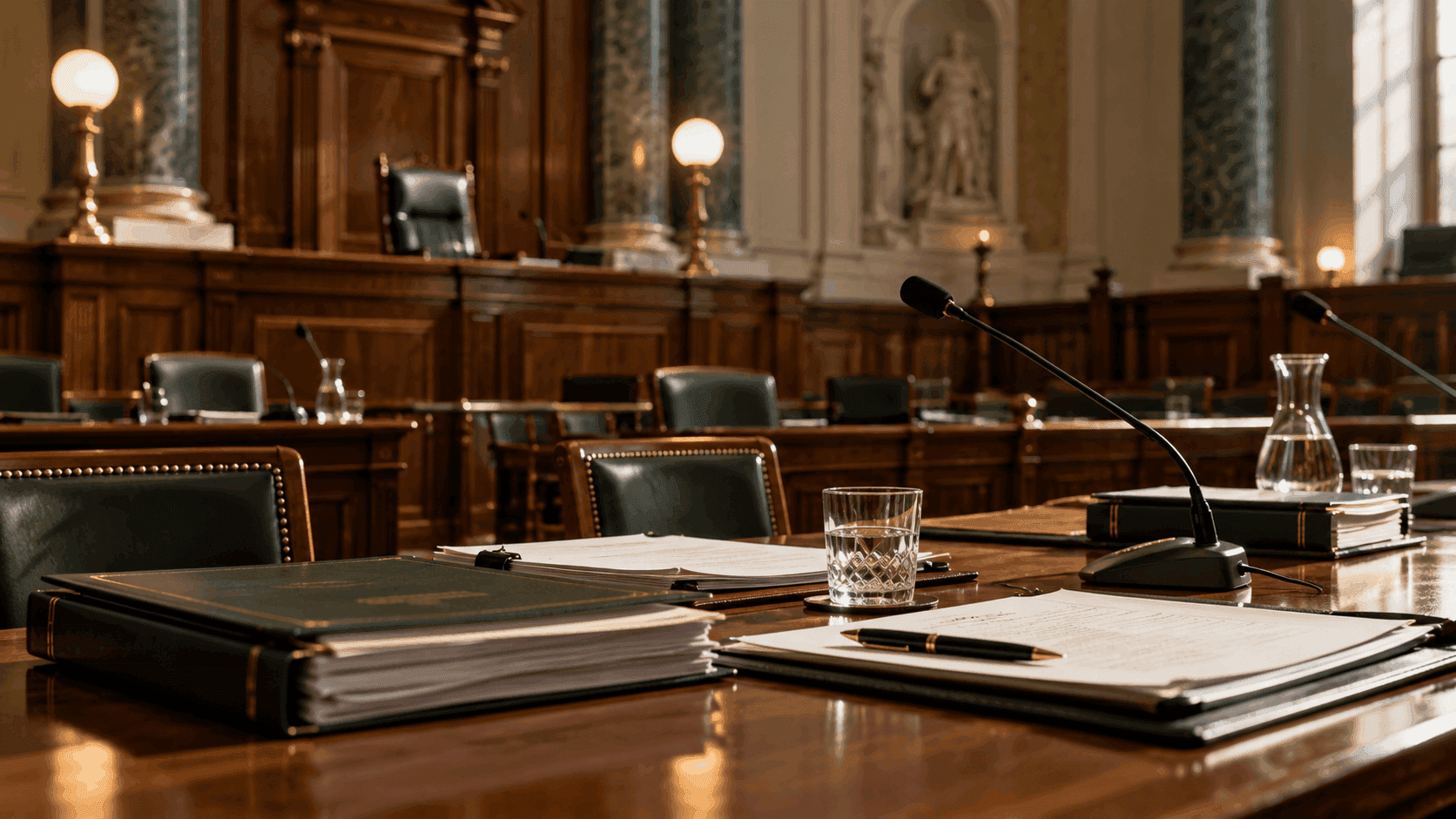
Inquests, public inquiries and judicial review can all examine serious matters involving public bodies or institutions, but they perform very different legal functions.
An inquest is primarily concerned with investigating a death. A public inquiry examines matters of wider public concern. Judicial review allows the High Court to examine whether a public body has acted lawfully.
Those differences affect who can begin each process, the evidence considered, the questions that can be answered and the outcomes that may follow.
Understanding which process is relevant can be particularly important where a case involves a death, alleged institutional failure, government decision-making or wider questions of public accountability.
What Is an Inquest?
An inquest is a formal investigation conducted by a coroner into a death that requires further investigation.
Coroners in Northern Ireland are independent judicial officers. Deaths may be reported to a coroner where they are unexpected or unexplained, result from violence or accident, may involve negligence or otherwise require investigation.
The coroner may obtain medical records, witness statements and other evidence, arrange a post-mortem examination where appropriate and hold an inquest where one is required.
An inquest is an inquisitorial fact-finding process. It is not a criminal trial and it is not a civil claim for compensation.
For a more detailed explanation, see our guide to what happens at an inquest in Northern Ireland.
What Questions Does an Inquest Consider?
The precise scope depends on the circumstances of the death and the issues the coroner considers relevant.
An inquest may examine matters such as the identity of the person who died, when and where the death occurred, the medical cause of death and the circumstances in which it happened.
In some cases the investigation may need to consider a wider factual background in order to establish properly how the death occurred.
This can be particularly important where the actions of the State or another public authority may be relevant.
Can an Inquest Decide Who Is Legally Responsible?
An inquest does not determine civil or criminal liability.
Its purpose is fact-finding rather than deciding whether someone should be convicted of a criminal offence or required to pay compensation.
However, the factual findings made during an inquest can still be significant. They may clarify what happened, identify important circumstances surrounding a death and provide information that may be relevant to other legal processes.
What Is an Article 2 Inquest?
Article 2 of the European Convention on Human Rights protects the right to life and can impose a procedural obligation on the State to carry out an effective investigation into certain deaths.
Where Article 2 is engaged, the scope of the investigation may extend beyond the immediate medical cause of death and consider broader circumstances relevant to how the death occurred.
Not every inquest is an Article 2 inquest. Whether Article 2 applies depends on the circumstances of the particular death and the relevant legal principles.
Our separate guide explains what an Article 2 inquest is in more detail.
What Is a Public Inquiry?
A public inquiry is generally established to investigate events or circumstances that have caused significant public concern.
Some public inquiries are established under the Inquiries Act 2005. A statutory inquiry is given terms of reference defining the matters it has been established to investigate.
The inquiry may gather documents, hear evidence, consider witness testimony, examine institutional practices and investigate how particular events occurred.
The scale of a public inquiry can vary considerably. Some focus on a particular incident or institutional failure, while others examine events that took place over many years and affected large numbers of people.
You can read more about how a public inquiry works.
Who Establishes a Public Inquiry?
A statutory inquiry under the Inquiries Act 2005 may be established by a relevant Minister where particular events have caused, or are capable of causing, public concern, or where there is public concern that particular events may have occurred.
This is different from an ordinary civil claim brought by an individual.
Individuals, families, campaigners or organisations may call for an inquiry to be established, but they do not simply commence a statutory public inquiry themselves in the way that a claimant can issue certain forms of court proceedings.
What Can a Public Inquiry Investigate?
The issues investigated are principally determined by the inquiry's terms of reference.
Depending on those terms, an inquiry might examine:
- the conduct of public bodies or institutions;
- the circumstances surrounding particular events;
- whether systems, policies or procedures failed;
- how decisions were made;
- what information was available to those involved;
- the experiences of affected individuals or families; and
- whether lessons or reforms should follow.
An inquiry may ultimately publish findings and recommendations addressing the matters within its terms of reference.
Can a Public Inquiry Decide Civil or Criminal Liability?
No. An inquiry under the Inquiries Act 2005 has no power to determine a person's civil or criminal liability.
That does not prevent an inquiry from making factual findings or findings concerning responsibility where those matters are relevant to its work.
Its conclusions may therefore be highly significant even though the inquiry itself is not a criminal court or a civil damages action.
What Is Judicial Review?
Judicial review is a court process through which the High Court can examine the lawfulness of decisions, actions or failures to act by public bodies and other bodies exercising public functions.
The central question is usually not whether the court would have made the same decision.
Instead, the court considers whether the decision-making process was legally valid.
This can include questions about whether a public body acted within its legal powers, followed a fair procedure, took relevant considerations into account or complied with legal obligations affecting the decision.
Our detailed guide explains judicial review in Northern Ireland and the circumstances in which it may be relevant.
Is Judicial Review an Appeal?
Not usually.
An appeal and judicial review perform different functions.
An appeal may allow a higher court or tribunal to reconsider a decision under a particular statutory appeal process. Judicial review generally examines the legality of public decision-making rather than simply substituting the High Court's view for that of the original decision-maker.
Whether an alternative appeal or review procedure exists can also be important when considering whether judicial review is the appropriate route.
What Can Happen If Judicial Review Succeeds?
The appropriate remedy depends on the case.
The High Court may, for example, quash an unlawful decision, make a declaration concerning the legal position or require a public authority to perform a legal duty.
A successful judicial review does not necessarily mean that the applicant receives the substantive decision they originally wanted.
Where a decision is quashed, the public authority may sometimes need to reconsider the matter and make a fresh decision in accordance with the law.
How Are the Three Processes Different?
The simplest distinction is to look at the main question each process is designed to answer.
- Inquest: investigates the circumstances surrounding a death.
- Public inquiry: investigates matters of wider public concern within defined terms of reference.
- Judicial review: examines whether a public body's decision, action or failure to act was lawful.
There can be overlap in the facts examined, particularly where serious events involve public authorities or institutions, but the legal purpose of each process remains different.
Can the Same Events Lead to More Than One Process?
Yes.
The same underlying events can potentially give rise to several different legal or investigative processes.
For example, circumstances surrounding a death could result in an inquest while also raising questions about decisions made by a public authority. Wider institutional concerns arising from the same events could potentially become relevant to a public inquiry.
Separate civil proceedings, criminal investigations or human rights issues may also arise depending on the circumstances.
The existence of one process does not automatically mean that another process is unnecessary or available. Each route has to be considered according to its own legal requirements.
Who Can Participate?
The rules governing participation are different for each process.
At an inquest, certain individuals and organisations may be recognised as properly interested persons and may be legally represented.
A public inquiry may identify core participants or otherwise determine how individuals and organisations can participate, provide evidence or be represented according to its procedures.
Judicial review, by contrast, is litigation brought by an applicant against a proposed respondent, usually involving the public body whose decision or conduct is challenged. Other persons whose interests may be affected can sometimes also become involved in the proceedings.
Is Evidence Handled Differently?
Yes.
An inquest may consider witness testimony, medical evidence, documentary material and other evidence relevant to the death.
A public inquiry may examine extensive institutional records, witness statements, expert material, official correspondence and evidence relating to the broader issues in its terms of reference.
Judicial review often focuses particularly closely on the material available to the decision-maker, the reasons for the decision and the legal process followed.
In complex cases, specialist evidence may also become relevant. Our Knowledge Centre guide explains how expert evidence is used in complex litigation.
Do the Time Limits Differ?
Yes, and this is an important distinction.
An individual does not normally begin an inquest or statutory public inquiry by issuing proceedings within a claimant's limitation period in the same way as an ordinary civil claim.
Judicial review is different. Under the general Northern Ireland judicial review rules, an application for leave should ordinarily be made within three months from the date when the grounds for the application first arose, unless the court considers that there is good reason to extend the period.
Some particular types of decision may be subject to different or shorter statutory deadlines.
Anyone considering judicial review should therefore obtain advice early rather than assume that three months will always be available in every situation.
Can Compensation Be Awarded?
An inquest does not award damages for a death, and a public inquiry does not operate as a civil compensation claim.
Judicial review is also primarily a public law remedy concerned with legality rather than compensation.
Depending on the underlying circumstances, separate civil proceedings or another legal route may need to be considered if a person is seeking damages.
The existence of an inquest, inquiry or judicial review therefore does not necessarily resolve every legal issue arising from the events concerned.
Which Process Is Relevant to My Situation?
That depends on the legal issue that needs to be addressed.
If the central issue is understanding the circumstances of a death, an inquest may be relevant.
If serious events raise wider questions of public or institutional concern, a public inquiry may be established to investigate those matters.
If an individual or organisation needs to challenge the legality of a decision made by a public authority, judicial review may be the appropriate court procedure.
Some particularly complex matters can involve more than one of these processes, either at the same time or at different stages.
Inquests, Public Inquiries and Public Law in Northern Ireland
P.A. Duffy & Co advises individuals and families in matters involving human rights and public law, including inquests, judicial review, public inquiries and cases involving public authorities.
These proceedings can involve substantial evidence, sensitive factual issues and legal questions about the responsibilities of institutions and the State.
Our guide to managing complex legal cases explains how evidence, legal strategy and court procedure can be coordinated in substantial matters.
If you are involved in an inquest, inquiry or potential public law challenge, early legal advice can help identify which process is relevant, any important deadlines and what practical steps may need to be considered.
Frequently Asked Questions
Is an inquest the same as a public inquiry?
No. An inquest investigates the circumstances of a death and is conducted by a coroner. A public inquiry is generally established to investigate matters of wider public concern within defined terms of reference.
What is the main difference between an inquest and judicial review?
An inquest is a fact-finding investigation into a death. Judicial review is a court procedure used to examine whether a decision, action or failure to act by a public body was lawful.
Can a public inquiry find someone legally liable?
A statutory inquiry under the Inquiries Act 2005 cannot determine civil or criminal liability. It can, however, make factual findings and recommendations within its terms of reference.
Can an inquest and judicial review happen in relation to the same events?
Potentially. Different legal processes can arise from the same underlying events because they address different questions. Whether judicial review is available will depend on the particular public decision or conduct being challenged.
How long do I have to bring judicial review proceedings in Northern Ireland?
The general rule is that an application for leave to apply for judicial review should be made within three months from when the grounds first arose, unless the court considers that there is good reason to extend the period. Some matters can be subject to different or shorter statutory deadlines.
Legal Knowledge Centre
More Guidance

How Are Complex Legal Cases Managed in Northern Ireland?
Learn how complex legal cases may be investigated and managed in Northern Ireland, including evidence, expert input, court procedures and client communication.
Read Guidance
How Can I Fund a Complex Legal Claim in Northern Ireland?
Understand some of the ways a complex legal claim may be funded in Northern Ireland, including legal aid, private funding and legal expenses insurance.
Read Guidance
How Is Expert Evidence Used in Complex Litigation?
Learn how expert evidence may be used in complex litigation in Northern Ireland, including expert reports, independent opinions, expert meetings and court evidence.
Read GuidanceP.A. Duffy & Co
Speak to us with no obligation
Confidential legal advice from experienced solicitors across Ireland.
Want to talk?
Call us with any queries
Mon – Fri, 9am – 5pm
Make an Enquiry
Leave your details below and we'll get in touch with you as soon as possible!